Authentic Culinary
Experiences
A One-Day Immersive Culinary Experience
CHUTNEY BASICS
Most people think a chutney is something served alongside a meal.
Something small.Something optional.In India, it is anything but.
A chutney can awaken an appetite, balance a meal, preserve a season, express a landscape or carry the memory of a family across generations.
Duration
1 Day
Location
Auroville, Tamil Nadu
Group Size
Limited to 10 Participants
Take Away
Participants receive a detailed E-Booklet of the course

WHAT WE WILL COOK & EAT
Rather than preparing a single recipe, this workshop explores how different temperings transform simple dishes. Depending on the season and mentor, participants may prepare:
Coconut Chutney
A coconut chutney tells us we are close to the coast.
Peanut Chutney
Peanut chutneys belong to the dry landscapes of the Deccan.
Walnut Chutney
A walnut chutney speaks of mountain valleys.
Kasundi
Kasundi carries the unmistakable character of Bengal.
Dosas with different Chutneys
Dosas served with different kinds of Chutneys prepared.
Shared Lunch
Participants enjoy the complete meal together.


WHY THIS PROGRAM MATTERS
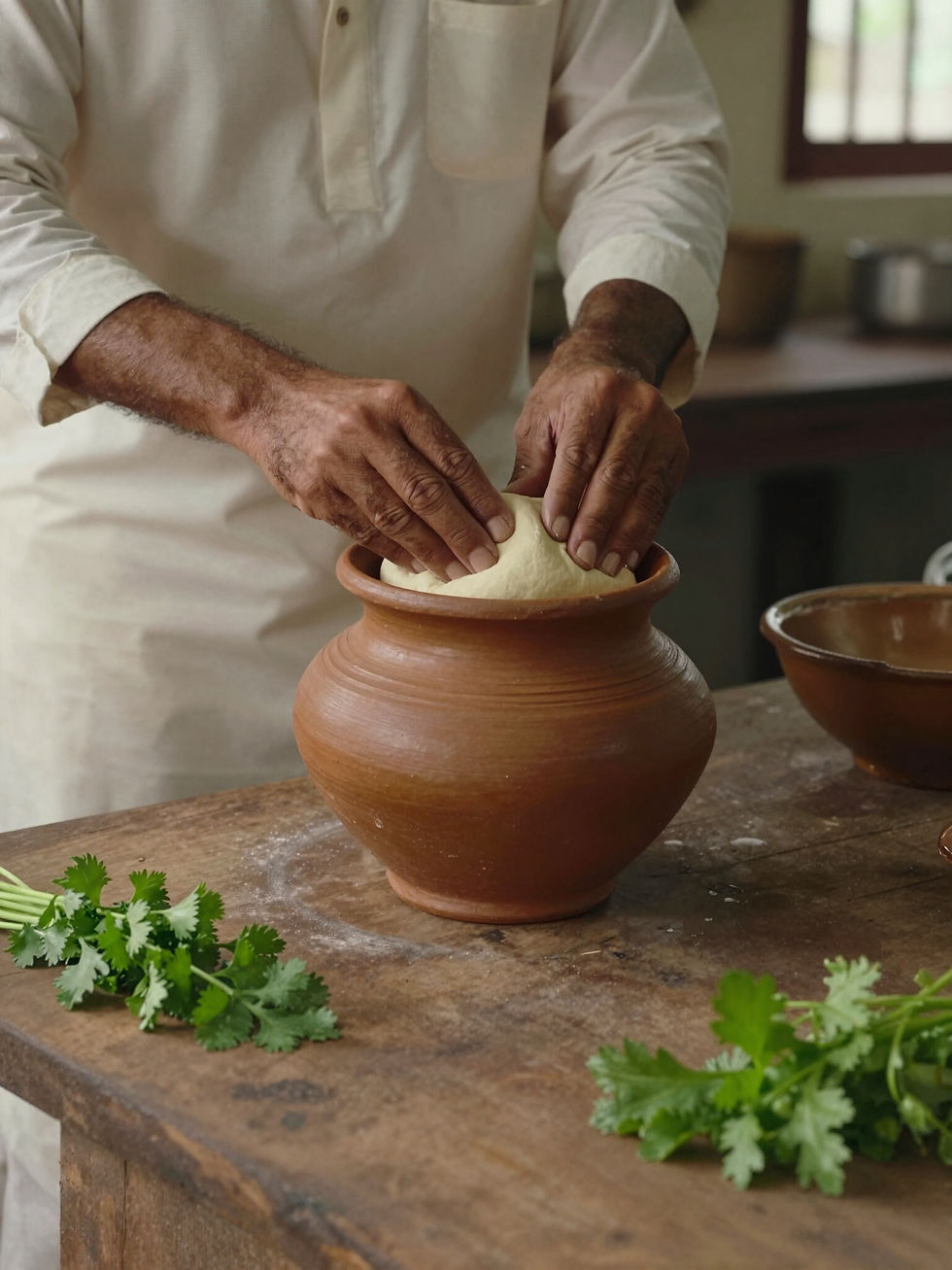
Chutneys occupy a unique place in Indian cuisine.
Unlike many dishes, they are prepared not to stand alone but to complete a meal.
They bring freshness where food is rich.
Warmth where flavours are gentle.
Acidity where balance is needed.
Texture where softness dominates.
Sometimes they stimulate the appetite.
Sometimes they cool the palate.
Sometimes they preserve the harvest.
Sometimes they become the meal itself.
Perhaps nowhere else in Indian cooking do geography, biodiversity and everyday ingenuity meet so naturally.
Every village.
Every family.
Every season.
Every kitchen.
Adds another voice to this remarkable tradition.
WHAT PARTICIPANTS EXPLORE
Fresh
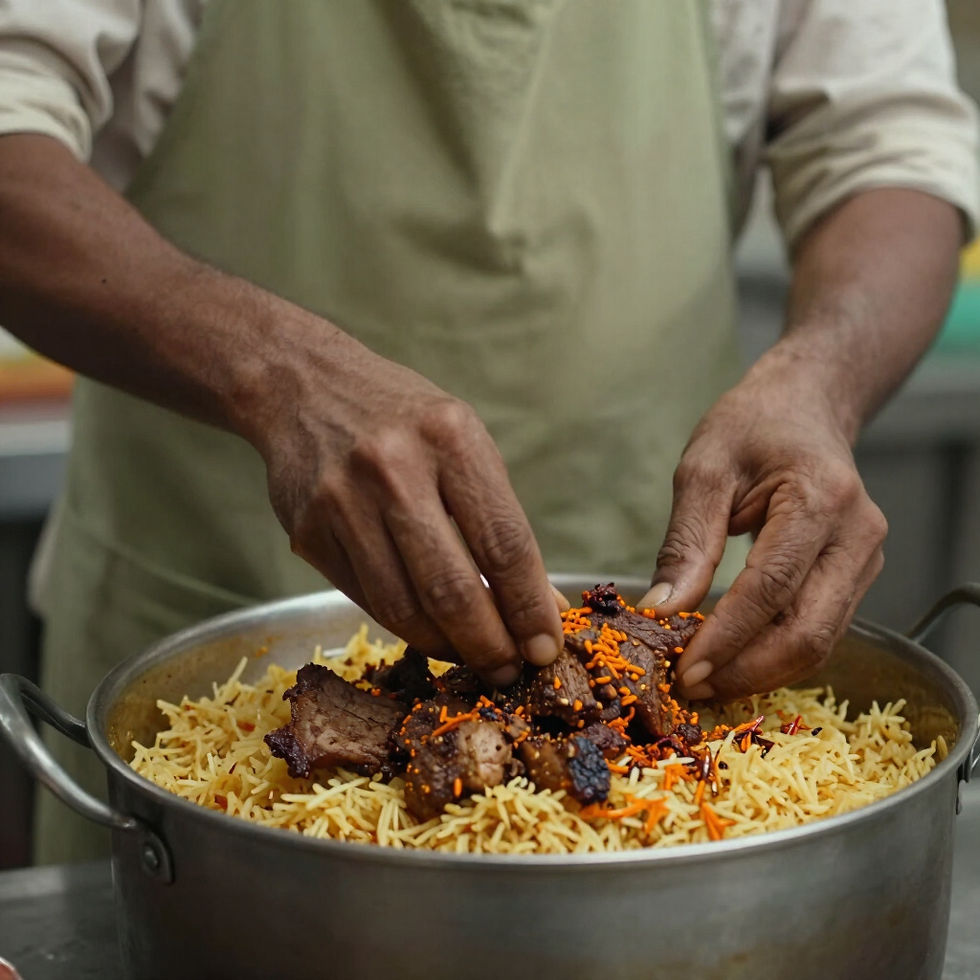
Grinding herbs, coconut and spices while preserving their natural aromas.

Fire
Understanding how roasting and tempering awaken entirely new flavours.

Time
Discovering how fermentation quietly reshapes ingredients over days rather than minutes.

Balance
Learning to harmonise freshness, acidity, heat, sweetness, bitterness and texture so that every chutney feels complete.

Traditions
Preparations Specific to Regions

Common Mistakes
Common mistakes and how to avoid them
BEFORE YOU ARRIVE
A few simple notes to help you get the most from your day.
Eat a light breakfast.
Wear comfortable clothing.
No previous cooking experience is required.
Expect to participate, observe and ask questions.
Expect to enjoy a generous shared meal.
THE EXPERIENCE JOURNEY
10:00 AM
Arrival & Orientation
Arriving, settling in and opening the central question: what makes a Tadka a Tadka?
10:15 AM
Coconut Chutney
Coconut Chutney preparation.
10:45 AM
Peanut Chutney
Peanut chutneys preparation involving roasting and grinding.
11:15 AM
Walnut Chutney
A walnut chutney speaks of mountain valleys.
12:00 PM
Kasundi
Kasundi carries the unmistakable character of Bengal.
12:15 PM
Dosas with Cutneys
Dosas served with different kinds of Chutneys prepared.
01:00 PM
Closing Circle
Questions, reflections and introduction to future ACE culinary experiences.
WHO THIS PROGRAM IS FOR

International Travellers
Seeking a deeper understanding of India through food and culture.

Indian Diaspora
Reconnecting with India’s culinary traditions in a thoughtful way.

Home Cooks
Curious cooks who want to deepen their practice.

Media & Storytellers
Writers, photographers and filmmakers interested in food culture.

Curious Learners
Anyone who loves biryani and wants to understand it more deeply.
WHAT PARTICIPANTS TAKE AWAY
By the end of the day, participants leave with a profound understanding of biryani as a technical and cultural framework.
Understand why chutneys occupy such an important place in Indian food traditions.
Recognise the relationship between ingredients, geography and regional identity.
Learn the four foundational principles that shape most Indian chutneys.
Appreciate how grinding, roasting, tempering and fermentation transform flavour.
Develop confidence to create their own seasonal chutneys using local ingredients.
Begin seeing food not simply as recipes, but as expressions of people, place and culture.
Continue the journey
This experience is part of ACE’s wider exploration of biryani traditions across regions.

AWADHI BIRYANI EXPERIENCE
Lucknow court cuisine: elegant, refined and lightly spiced.

THALASSERY BIRYANI EXPERIENCE
Malabar coast influences: short-grain rice and Kerala spices.

DHAKAI KACCHI BIRYANI EXPERIENCE
Rich kacchi dum tradition: deep integration of rice and meat.
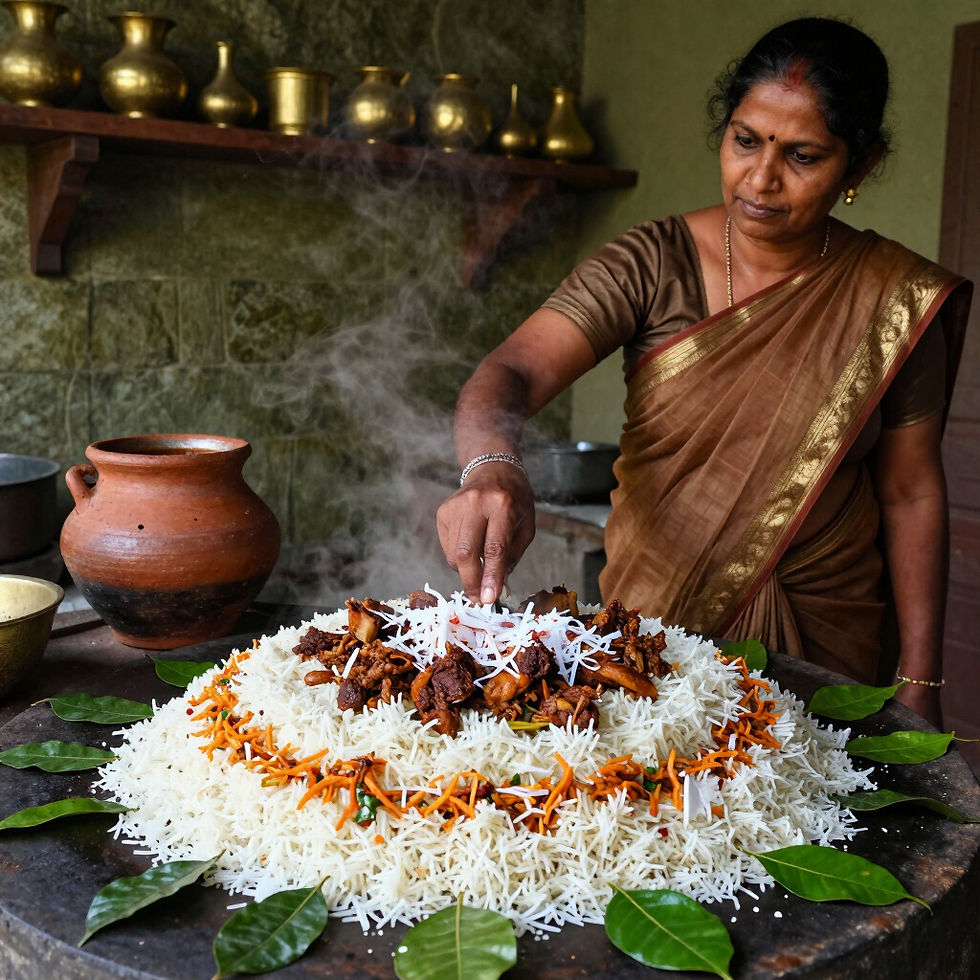
BHATKALI BIRYANI EXPERIENCE
Coastal Karnataka: white biryani with green chilli character.
THE ACE PERSPECTIVE
Today's workshop follows a simple progression.
We begin with freshness.
We experience transformation through fire.
We observe the quiet work of time.
Finally, we taste them together and ask what each chutney reveals about the place from which it comes.
Throughout the day we encourage participants to observe carefully.
Listen to the crackle of mustard seeds.
Notice how herbs change after grinding.
Compare the aroma of a fresh chutney with one finished by a hot tempering.
Observe how fermentation softens sharpness and develops complexity.
These observations become the real learning.